

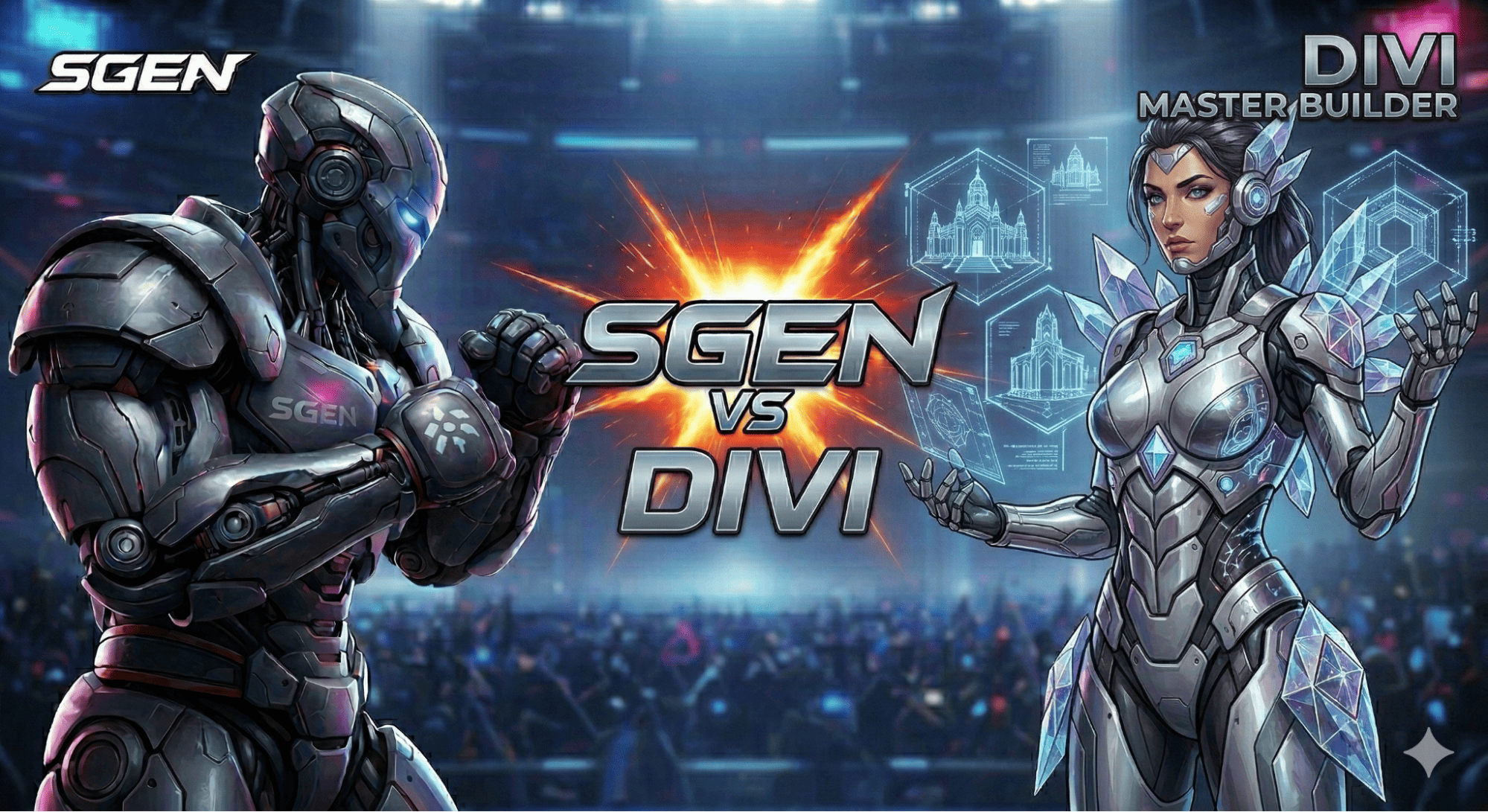
Divi markets itself as the ultimate WordPress page builder, a Swiss Army knife for the creative soul who cannot be bothered to learn what a closing tag looks like. In reality, it is a bloated, shortcode-encrusted parasite that feeds on server resources and user patience. It promises the world to non-developers while handing them a shovel to dig their own digital grave. For those of us who actually have to maintain this wreckage, Divi is not a tool; it is a technical debt factory that produces high-interest rates from the moment you click activate.
The Shortcode Necropolis
The invisible rot inside a Divi build is a masterclass in how not to architect a web platform. Even with the supposed performance leaps in Divi 5, the underlying philosophy remains a catastrophic failure. You are looking at a DOM tree so deep it might as well be an archaeological dig site. Every simple button is wrapped in six layers of unnecessary div containers, each carrying its own baggage of inline styles and redundant classes. This div soup does not just look ugly in the inspector; it actively chokes the browser rendering engine, leading to layout shifts that make your site look like it is having a seizure on mid-tier mobile devices.The JavaScript situation is equally grim. Divi attempts to compensate for its weight by dynamically loading modules, but the overhead of the builder framework itself is still a massive tax. You are forced to choose between a broken visual editor or a front-end that requires a supercomputer to reach a decent Time to Interactive score. SEO fundamentals are sacrificed at the altar of convenience. The query loops are frequently inefficient, firing off database requests that should have been cached years ago. It is a miracle these sites load at all in an era where users bounce faster than a bad check.
A Fever Dream of Nested Modals
Navigating the Divi Visual Builder is like trying to perform surgery with a pair of oven mitts. The interface is a cluttered mess of nested modals and purple circles that obscure the very content you are trying to edit. It is a user-hostile environment disguised as modern design. The lag between a slider movement and a visual change is just long enough to make you question your career choices. Settings are buried deep within tabbed interfaces, ensuring that finding a single padding value feels like a high-stakes game of hide-and-seek.The end-user experience is no better. Because the builder encourages amateurish design patterns, the resulting sites are often a chaotic jumble of parallax effects and entrance animations that serve no purpose other than to distract from the lack of actual content. It is the digital equivalent of a strip mall with too many neon signs. Interaction design is treated as an afterthought, leading to broken navigation menus and buttons that do not behave like buttons. It is a visual assault that prioritizes the designer’s ego over the visitor’s needs.
If I Had To Fix This Mess
Nuke the third-party scripts and the half-dozen optimization plugins you bought to try and fix Divi’s inherent failures; they are just adding more weight to a sinking ship.Implement strict server-side caching and static asset generation to bypass the database-heavy rendering process that Divi loves so much.
Strip out the redundant entrance animations and parallax effects that are destroying your LCP (Largest Contentful Paint) scores on mobile.
Adopt a decoupled architecture where your front-end is not held hostage by a legacy theme engine.
Migrate your content into a clean, structured format and deploy it using SGEN to restore your sanity and your site speed.
The Bottom Line
Divi is a monument to the idea that convenience should trump competence, leaving a trail of broken websites and frustrated developers in its wake. SGEN is the only reason I still have the will to code.Switch to a platform that actually respects your server’s CPU and your own sanity.
Switch to SGEN today